
By: Mark Schneider
Introduction
This list is based on my own experiences after many years of teaching self-defense with firearms, personal encounters, and studying countless real-world cases. I’ve also learned from renowned instructors like Massad Ayoob, whose insights have been invaluable in understanding the legal and practical aspects of responsible gun ownership. These rules are designed to help fellow gun owners stay safe, responsible, and legally protected. Following them can make all the difference when it comes to defending yourself, both physically and legally.
Rule #1: You Are Not Allowed to Get Angry When Carrying a Firearm
Carrying a firearm demands emotional maturity. Anger leads to impulsive actions, and in many cases, it can turn a person from a potential victim into the aggressor. Courts often categorize self-defense situations into two roles: the aggressor and the innocent party. Law enforcement will look at incidents with the same distinction, dividing the parties involved into the victim and the perpetrator. Don’t end up on the wrong side of this division.
A prime example of this is a road rage incident in Indiana where a 29-year-old aggressor lost his life after approaching another driver with a handgun in hand. He became the aggressor when he let anger and emotion take control. In response, the other driver, who was initially blocked and likely feared for his life, defended himself with deadly force. The aggressor lost his life because he couldn’t control his emotions. Read more on the incident here.
Rule #2: Be Careful with Your Language Before and After a Self-Defense Situation
Words carry immense weight in a self-defense case. Avoid terms like “kill,” “shot,” “weapon,” “murder,” and any profanity or offensive language, as they can and will be used against you if your case goes to court. Even a statement like “I’m going to kill you” before shots are fired could paint you as the aggressor, especially if a witness overhears.
During a 911 call, avoid stating, “I shot and killed this guy.” Instead, keep your language focused and neutral. Saying, “There was an incident, and I need help,” leaves less for prosecutors to use against you. Additionally, I recommend avoiding the term “weapon” entirely. Think of your firearm as a life-saving tool—a last-resort measure to protect yourself in an emergency. Words matter, and in court, they can shape a jury’s perception, especially for jurors who may already be inclined against firearms.
Rule #3: Be Cautious About Social Media Posts
Your online presence can come back to haunt you. In a recent case in Austin, Texas, Daniel Perry, an Uber driver, drove into a protest in 2020 and ended up fatally shooting a protester who approached his car with an AKM rifle. Initially, charges weren’t pursued, but a newly elected prosecutor with a different political agenda took up the case, and Perry was eventually found guilty—despite later being pardoned by the governor. Perry’s own Twitter posts were presented as evidence, where he had shared controversial statements about protestors. Read more on the incident here.
What you post online can and will be used to define your character in court. Be mindful of what you share, as it could be interpreted out of context and used to portray you in a negative light, especially if a prosecutor wants to challenge your self-defense claim.
Rule #4: Don’t Put Inappropriate Messages or Symbols on Your Firearm
Adding messages or symbols like “You’re F**ked,” “Wait for the Flash,” “The Grim Reaper,” or any other inflammatory wording or images to your firearm can work against you if you’re ever involved in a shooting. One notable case highlighting this involved the 2016 killing of Daniel Shaver, who was staying at a La Quinta Inn in Arizona. Shaver, who was intoxicated, received a weapons call for handling his airsoft guns in a way that caused concern. A responding officer ultimately shot and killed Shaver using an AR-15 rifle with a custom dust cover bearing the phrase “You’re F**Ked.” The dust cover, added without department approval, led the district attorney to charge the officer with murder, partly due to the phrase’s implications, though he was eventually acquitted. Nonetheless, the message on his firearm did not help his defense and could have influenced perceptions negatively.
Avoid adding controversial customizations to your firearm. Such additions are easily avoidable and can only add unnecessary complications to your defense. Read more on the incident here.
Rule #5: Do Not Modify the Internals of Your Handgun or Self-Defense Tools
Modifying your firearm’s internals—such as installing a competition trigger or removing safety features—might seem appealing, especially if you’re familiar with competitive shooting where these modifications are common. However, making such changes on a self-defense or everyday carry gun can expose you to serious legal risks. Prosecutors may argue that you used a “hair trigger” similar to what criminals might use, painting a negative picture of your intentions.
In the movie Falling Down, for example, Michael Douglas’s character accidentally discharges a machine pistol with a “hair trigger,” causing unintended chaos. Unfortunately, many people base their understanding of firearms on movies, and these same individuals could end up on your jury. Prosecutors can have a field day with non-factory modifications, citing police or gunsmith reports showing that you adjusted your firearm to non-standard specifications, making it seem “unsafe.” Read more on this topic by Massad Ayoob, who provides real case examples here.
The best advice? Leave your carry gun’s internals as they are. There are plenty of acceptable, court-defensible modifications—grip tape, light attachments, red dots, and upgraded sights—that can enhance your gun’s functionality without inviting legal scrutiny. All of the firearms I carry, including my Glock 45 and Glock 43X, retain factory internals. If you need modifications, always use a professional gunsmith. I recommend Bowers Tactical in Centennial; Rob is an excellent gunsmith and would even provide expert testimony if necessary. Check out Bowers Tactical here.
Rule #6: Do Not Carry “High Capacity” Magazines
In Colorado, a 2013 law restricts magazines over 15 rounds; buying, selling, or transferring these “high capacity” magazines is illegal. You cannot carry more than 15 rounds in a larger magazine and still be within the law. Although there are many grandfathered magazines circulating in Colorado, enforcement could increase depending on the political climate. With recent shifts in the state legislature, there is a potential for increased scrutiny of compliance with this law.
While there’s hope that recent Supreme Court cases like Bruen, McDonald, and Heller will eventually lead to a favorable ruling on magazine capacity limits, for now, it’s safest to comply with state laws. I personally carry a Glock 43X and Glock 45, each equipped with 15-round magazines.
Statistically, self-defense encounters typically follow the “3-5 rule”: three to five rounds fired within three to five seconds at three to five yards. Although I firmly believe in the right to use attachments and accessories under the Second Amendment, using standard-capacity magazines helps avoid unnecessary legal risks. Don’t give a prosecutor the chance to argue you were breaking the law and being unreasonable.
If you disagree with these restrictions, get active with organizations that defend the Second Amendment, such as NAGR, NRA, GOA, FPC, and RMGO.
Rule #7: Do Not Carry a Firearm with an Unserialized Frame
Carrying a firearm with an unserialized frame, commonly known as a “ghost gun,” can lead to significant legal complications. Prosecutors may argue that possessing an untraceable firearm indicates an intent to evade the law, portraying you as unreasonable and potentially undermining a self-defense claim. Jurors might view the use of such a firearm as suspicious, believing that a reasonable person would carry a serialized, legally traceable weapon.
In Colorado, as of June 2023, it is illegal to manufacture, possess, or sell unserialized firearms and firearm parts. Senate Bill 23-279 makes the sale, manufacture, and possession of ghost guns a Class 1 misdemeanor on the first offense and a Class 5 felony on subsequent offenses. Read more about the law here.
To avoid legal risks and ensure responsible firearm ownership, always carry a firearm with a serialized frame. This not only keeps you compliant with the law but also supports a stronger defense in any legal proceedings related to firearm use.
Rule #8: Use Your Firearm’s Flashlight Attachment Properly
Using a flashlight attachment requires responsible use. If you carry a firearm-mounted flashlight, as I do with my Glock 43X and Glock 45, understand that it’s not meant to replace a regular flashlight. Massad Ayoob emphasizes the importance of using a handheld flashlight for general illumination rather than pointing a firearm-mounted light to “see what’s going on.”
Consider this scenario: You hear a loud noise by a dumpster late at night and, instead of using a pocket flashlight, you draw your firearm and point its attached flashlight toward the noise. You discover it’s just a neighbor throwing something in the dumpster. If they feel threatened and call the police, you could be charged with felony menacing.
In Colorado, felony menacing is defined as knowingly placing or attempting to place another person in fear of imminent serious bodily injury by the use of a deadly weapon. It’s a serious charge that could result in significant penalties and jail time.
Lesson: Always use a separate flashlight for general visibility, and reserve the firearm-mounted light for situations where it’s appropriate, reasonable, and justified to do so.
Rule #9: Do Not Use Self-Defense Ammo That You Made Yourself
Carrying self-defense ammunition that you personally hand-loaded or manufactured can open the door to both criminal and civil liability. Prosecutors may argue that you used unregulated, “homemade” ammunition that isn’t standard, and they may question your entire manufacturing process in court. Ammo companies like Hornady and Federal employ experts, engineers, and extensive testing to ensure reliability, whereas homemade ammo can invite unnecessary scrutiny.
A reasonable person would use factory-made, reliable self-defense ammunition from trusted brands. While it’s fine to use homemade ammo for practice, when it comes to self-defense, stick to factory-produced cartridges that are specifically designed for defensive purposes. This distinction helps avoid any perception that you were using untested or unsafe ammunition.
Rule #10: Do Not Carry Under the Influence
Carrying a firearm while under the influence of any substance is not only a bad idea, but it’s also illegal in many states, including Colorado. Colorado law explicitly prohibits carrying a firearm while under the influence of alcohol or drugs. Some states, like Pennsylvania, may have looser regulations, but a reasonable person would avoid carrying a firearm while impaired by any substance.
If you’re ever involved in a defensive incident while under the influence, it could easily undermine your self-defense claim and open you up to criminal charges. To be a responsible gun owner, never carry a firearm if you’ve consumed anything that could impair your judgment or reaction time. This is one of the most critical aspects of firearm safety and responsibility.
Conclusion
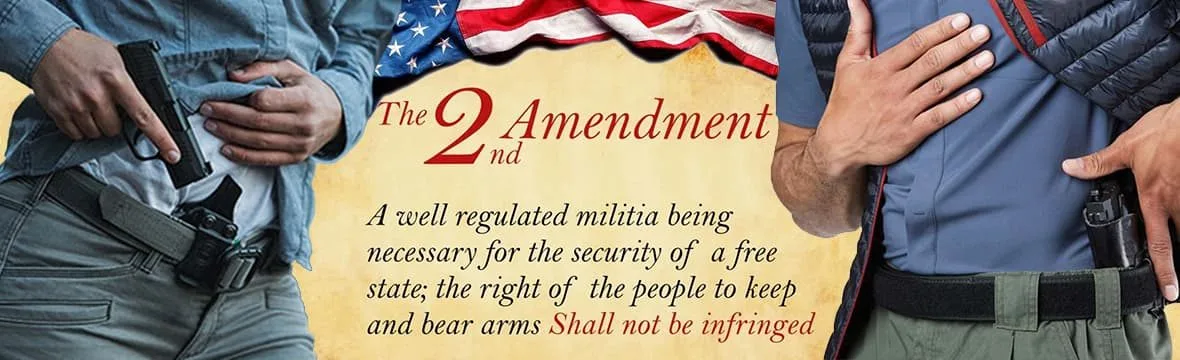
As responsible gun owners, we recognize that the Second Amendment is a fundamental right—and with that right comes the responsibility to act reasonably, legally, and prudently. This list isn’t about limiting your freedoms but rather ensuring that you protect yourself both in self-defense and in any legal aftermath. In today’s world, where self-defense situations are closely scrutinized, following these guidelines can help cover your bases, keep you compliant with the law, and strengthen your position if you’re ever required to defend yourself in court.
By making smart, careful choices in how we carry, handle, and prepare our firearms, we uphold the highest standards of responsible gun ownership. Remember, protecting yourself legally is as crucial as protecting yourself physically. Staying educated, prepared, and reasonable allows us to exercise our Second Amendment rights with confidence, honor, and integrity.
